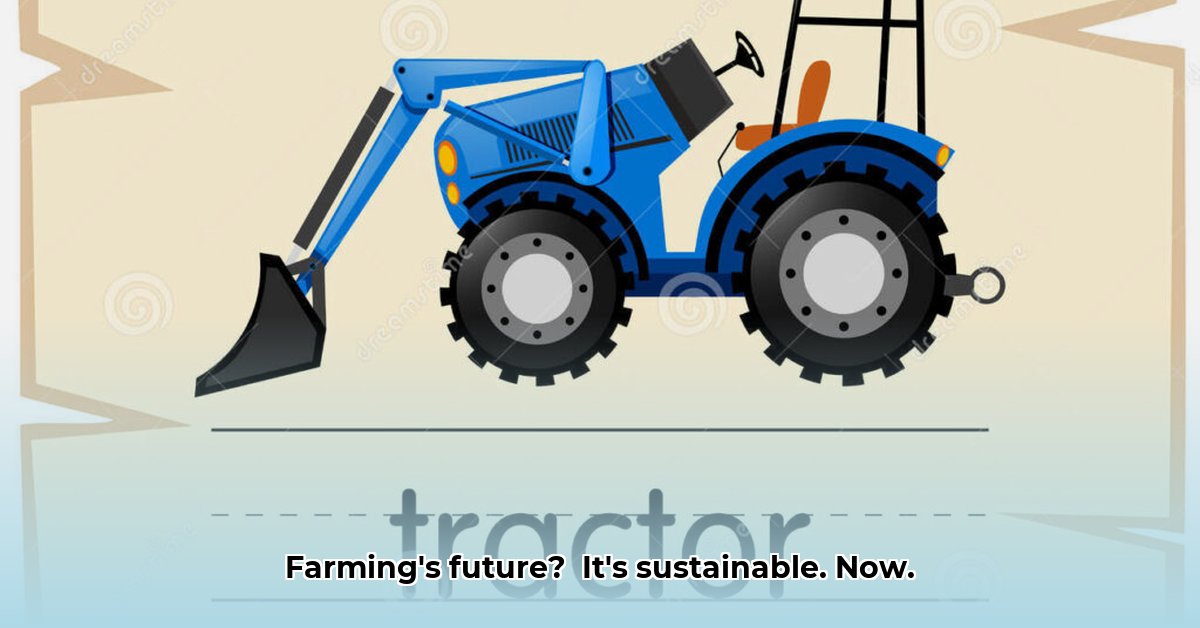
Tractor: The Green Revolution in Farming
Sustainable farming is no longer optional; it's essential for food security. At the heart of this shift is the tractor, undergoing a dramatic transformation. How can we make farms more environmentally friendly, productive, and profitable? Tractors are central to building a sustainable agricultural future. For information on American-made tractors, check out this resource.
Beyond Brute Force: The Smart Tractor
For generations, tractors provided raw power. Now, they're much more sophisticated. GPS-guided planting offers inch-perfect precision, automated harvesting systems work continuously, and data analysis helps farmers make informed decisions. It's not just about horsepower; it's about intelligent technology.
This precision farming improves sustainability. Advanced tractor technology enables efficient fertilizer and pesticide use, minimizing waste, reducing costs, and significantly lowering environmental impact. Using the exact amount of chemicals, only where needed, protects the environment and saves money. That's the power of modern tractors.
Powering a Greener Future: Fueling the Change
Traditional diesel tractors are facing scrutiny due to emissions concerns. The demand for cleaner alternatives is driving the rise of electric and alternative fuel tractors. Imagine a farm powered by solar energy, with electric tractors quietly tilling the land. This isn't futuristic; it's rapidly becoming reality.
However, challenges remain. Electric tractors currently have limitations in battery technology, resulting in shorter operating hours compared to diesel counterparts. Establishing efficient charging infrastructure across large farms is another obstacle. Could hydrogen fuel cells offer a solution? It's an area of active research. The tractor technology landscape is dynamic, with exciting new developments emerging constantly.
Choosing the Right Tractor: A Farmer's Guide
Selecting the ideal tractor depends on individual needs. Farm size, crop types, and budget all play a role. Smaller farms might prefer compact electric models, while large-scale operations may benefit from AI-guided autonomous fleets. Here’s a practical approach:
- Assess Your Needs: Identify primary farming tasks, land size, and crops. This narrows down tractor options significantly.
- Evaluate Technology: Determine essential features: GPS guidance, auto-steering, automated harvesting. Focus on features boosting your farm's efficiency and profitability.
- Consider Costs: Account for purchase price, running costs (fuel or electricity), and maintenance throughout the tractor's lifespan. Explore potential government grants or subsidies.
- Investigate Incentives: Many governments offer financial assistance for sustainable farming practices and equipment. Research available grants and subsidies in your region.
Choosing the right tractor is a crucial investment decision.
The Economic and Environmental Impact: A Win-Win
Sustainable tractors are both environmentally responsible and economically advantageous. Lower fuel consumption, reduced waste, and improved yields translate to higher profitability. While the initial investment might seem substantial, long-term benefits often outweigh the upfront costs. Government support and innovative financing options can help overcome this initial hurdle.
The Future of Farming: Collaboration is Key
The future of agriculture hinges on collaboration. Tractor manufacturers, agricultural researchers, farmers, and policymakers must work together. Continued research into battery technology, alternative fuels, and AI-driven automation is vital. We need an environment that fosters innovation and ensures access to sustainable tractor technology for all farmers, regardless of size or financial resources.
Embracing a Sustainable Future: Are You Ready?
The transition to sustainable farming is underway. Tractors are evolving, presenting opportunities for a more sustainable agricultural future. Are you ready to participate? The future of farming is being shaped today, and our choices will impact generations to come. The shift to sustainable farming is not just a trend; it's a necessity for the future of food production.
How to Choose a Sustainable Electric Tractor for Small Farm Operations
Key Takeaways:
- Electric tractors offer significant environmental benefits, reducing noise and air pollution.
- High initial costs are a barrier, but long-term operating cost savings are achievable.
- Battery lifespan and reliable charging infrastructure are paramount considerations.
- Farm size, terrain, and operations significantly influence the suitability of electric tractors.
- Government incentives and technological advancements are facilitating wider adoption.
Electric tractors are becoming increasingly practical for sustainable small-scale farming. However, choosing the right one requires careful consideration. It's about making smart financial decisions alongside environmentally conscious ones.
Assessing Your Needs: More Than Just Horsepower
Before selecting a model, thoroughly assess your farm's specific needs. What tasks will the tractor perform? What's the land's topography – hilly, flat, rocky? How many acres do you manage? These factors directly affect power requirements and battery life. A smaller, less powerful model might suffice for orchard maintenance, while a larger model is needed for extensive fieldwork.
Weighing the Pros and Cons: A Realistic Look
| Advantage | Disadvantage |
|---|---|
| Reduced emissions; cleaner environment | Higher initial purchase price |
| Lower running costs (fuel & maintenance) | Limited range on a single charge |
| Quieter operation | Potential charging infrastructure challenges |
| Instant torque for improved efficiency | Fewer models currently available |
Navigating the Market: Finding the Right Fit
The electric tractor market is rapidly evolving. Thorough research is crucial. Consider these factors:
- Battery capacity and charging time: Longer battery life means less downtime. Fast charging is essential for efficiency.
- Power and torque: Match these to your farm's specific needs. Avoid overspending on unnecessary power.
- Available attachments: Ensure the tractor is compatible with necessary implements.
- Warranty and service support: A robust warranty and readily available service are crucial.
- Government incentives: Explore available subsidies or tax breaks for electric tractor purchases.
Choosing a tractor is similar to buying a car: you wouldn't buy a sports car if you only need a compact vehicle.
Practical Steps to Choosing Your Electric Tractor
- Assess your farm's needs: Detailed assessment of every task and land characteristics is essential.
- Research available models: Compare specifications within your budget constraints.
- Compare battery life and charging options: This directly affects daily operation.
- Check attachment compatibility: Ensuring all necessary implements are compatible is vital.
- Consider warranties and service availability: Prevents costly future repairs.
- Explore financing options and government incentives: Makes the purchase more affordable.
The Long-Term Perspective: Beyond the Initial Investment
The initial cost is high, but remember the long-term benefits: lower running costs, reduced environmental impact, and potentially increased efficiency. Electric tractors are an investment in your farm's future, aligning with sustainability goals while potentially boosting profitability. Integrating renewable energy sources, like solar panels, for charging further enhances sustainability.